Tag Archives: Writing

Poetry and Story inspired by Landscape and Myth – Glens Centre YouTube channel

100474907_2343722685730463_2436211952595238912_n Tune in to the Glens Centre YouTube channel on Friday, June 5, 12, 19 and 26 at 8 PM, to hear poems, stories and songs inspired by the myths and legends, landscapes and festivals of the North West. Featuring work from:

  • Monica Corish,
  • Shane Leavy,
  • Dermot Lahiff,
  • Paula Lahiff,
  • Maggie Kilcoyne,
  • Tara Baoth Mooney,
  • Margaret Timoney
  • Tom Sigafoos.

You can hear more about these broadcasts in Brendan Murray’s interview with Monica Corish on Ocean FM’s Arts North West, on Thursday, June 4 at 9:30 PM (repeat Sunday, June 7 at 8 PM).

This event is a fundraiser for North West STOP Suicide Prevention, which provides counselling support for people at risk of suicide. Donations can be made through their website, or through Facebook.
Writing Prompts from the Cocoon, May 25

9360262_origA writing prompt to keep you going for a few weeks: Write a short story. How? There is plenty of advice on the Internet, some excellent, some less so. I chose the following from The Write Practice for one piece of advice that resonated: “Write your story in a single sitting”.
Here’s an abbreviated list of their suggestions:

  1. Read short stories…
  2. Write your story in a single sitting…  Everyone hates being interrupted when they’re telling a story. Use that to your advantage and don’t stop writing until you’ve finished…
  3. Read your draft… without changing anything. This will give you a sense of what work it needs…
  4. Write a premise… Get your head around the main idea behind your story by summarising your story in a one sentence premise. Your premise should contain three things: a character, a goal, and a situation.
  5. Write, edit, write, and edit. Good writing is rewriting. Use your second draft to fill in the plot holes and cut out the extraneous scenes and characters you discovered when you read the first draft in step #2. Then, polish up your final draft on the next round of edits.
  6. Submit!

Writing Prompts from the Cocoon, May 19

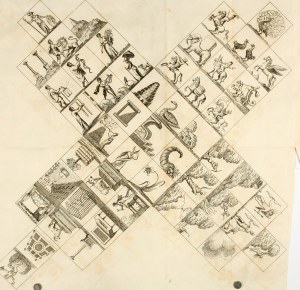
image from the new art of memory

Write a flash memoir. Start from the memory of a sound, a smell, a taste, a touch. Set yourself a 500-word limit – for me this is the equivalent of two handwritten A4 pages.
Before you begin consider the following advice from True Stories Well Told.
Flash Memoir tends to be:
  • Free of preambles—They start at the flashpoint—the moment when conflict ignites tangible action that drives the story forward.
  • Scene-based—They frequently take place in one run of time, without jumping around.
  • Observant—They tend to feature not the “I” but the “eye.”
  • Insightful—Like a flashlight illuminating a dark corner, they explore something that provoked an insight.
  • Specific—They stick with concrete, observable events and actions rather than abstract concepts.
  • True—As a subgenre of creative nonfiction, Flash Memoir must uphold the nonfiction contract that what is reported actually happened.
More advice from The Writer Mag :
  • At its most basic, a micro-memoir is written in sentences, drawn from personal experience, and strives to create a world in as few words as possible.
  • A true hybrid, the micro-memoir strives to combine the extreme abbreviation of poetry, the narrative tension of fiction, and the truth-telling of creative nonfiction…
  • What they’re not: fragments. Micro-memoirs aren’t slivers of a bigger creation. They’re designed to stand alone…
  • Forget about the big memories, like meeting your beloved or witnessing a tragedy.
  • Consider memories that you retain without understanding why.
And here are links to places where you might publish your flash memoir:


Image from page 80 of “The new art of memory, founded upon the principles taught by M. Gregor von Feinaigle: and applied to chronology, history, geography, languages, systematic tables, poetry, prose, and arithmetic.”

Image from page 80 of "The new art of memory, founded upon the principles taught by M. Gregor von Feinaigle: and applied to chronology, history, geography, languages, systematic tables, poetry, prose, and arithmetic. To which is added, some account of the

Writing Prompts from the Cocoon, May 12

Eavan_Boland_in_1996This week’s prompt is a quote from Eavan Boland, who died suddenly on April 27.

“I was aware,” she said, “that it was easier to have a political murder as the subject of an Irish poem than a baby or a washing machine.”

And as a bonus prompt, begin a piece of writing with the first line of The Pomegranate:

The only legend I have ever loved is…

Writing Prompts from the Cocoon, May 6

John_Tenniel_-_Illustration_from_The_Nursery_Alice_(1890)_-_c06543_03“It was the day the dandelions turned into clocks.” — Sherrie Scott, member of the original Scratching Hens.

You might use this quote as a regular prompt, or you might use it to create an acrostic poem — definition and examples here and here. Here’s a sample start:

it was the day i got lost in

the

woods…

a

s

t

h

e

d

a

y

t

h

e

d

a

n

d

e

l

i

o

n

s

t

u

r

n

e

d

i

n

t

o

c

l

o

c

k

s

Writing Prompts from the Cocoon, April 29

John_Tenniel_-_Illustration_from_The_Nursery_Alice_(1890)_-_c06543_03 Not a writing prompt this week, rather a signpost to online resources that will help you develop your craft.

If you have time on your hands, the renowned Iowa Writers Workshop offers FREE online courses in poetry, fiction and creative nonfiction.

And if you have time and money to spare, the excellent Arvon Foundation and Faber Academy offer a variety of options.

These range from a two hour Arvon Masterclass in Plot and Narrative Structure, (April 30 at 11 AM, cost £35); to Faber’s flagship eight-month course, Writing a Novel Online (application date August 19, cost £2500).

Happy writing – stay well, stay smart, stay kind.

Writing Prompts from the Cocoon – April 21

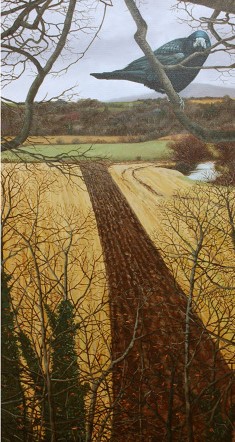
Four Horses – Photo by David WhyteThis week’s prompt was given to me by Eva O’Callaghan, another Amherst Method creative writing facilitator.
Start by reading “Four Horses”. Eva says: “I like the structure of this poem by David Whyte as a prompt for reflecting on and writing about any happening and its impact. I found it helpful to me to reflect on what is going on in our world at the moment.” She suggests that you write a response that is anchored by these phrases from Whyte’s poem:

  • On XXX day…
  • Since then…
  • Since then…
  • Each morning…
  • I spend my whole day…
  • I find myself wanting to…
  • I find myself wanting to…
  • I hear…
  • I feel…

And if you come up with a poem that you want to publish, be sure to credit its source: after Four Horses by David White

Photo credit David Whyte

Writing Prompts from the Cocoon – April 14

John_Tenniel_-_Illustration_from_The_Nursery_Alice_(1890)_-_c06543_03 Write a poem or a flash fiction that includes all these words, offered by the All-Weather Writers: Pencil – Oily – Diamond – Invoice – Pester – Muddy – Cacophony. Be as serious or as silly as you like. And if this writing prompt appeals, consider following the weekly Ó Bhéal Five Words International Poetry Competition

Flow Writing

If you get stuck, with this or any other prompt – staring at the blank page, waiting for inspiration to strike – you might consider the excellent Natalie Goldberg‘s excellent advice on flow writing, summarised here.

Writing Prompts from the Cocoon – April 7

Martin-Gale--Over-and-Above--oil-on-canvas--110-x-60-cm_670Today’s writing prompt is an invitation to Ekphrasis – defined by The Ekphrastic Review as “writing inspired by visual art”. Two famous examples of ekphrastic literature are WH Auden’s In the Musée des Beaux Arts, and Tracy Chevalier’s novel (later a movie) Girl with a Pearl Earring.

Today’s Ekphrastic inspiration is the painting “Over and Above by Irish artist Martin Gale. You can learn more about the painting and the artist on the National Gallery of Ireland website.

And if you are happy with what you write, you might consider submitting it to The Ekphrastic Review.

Writing Prompts from the Cocoon – March 31

John_Tenniel_-_Illustration_from_The_Nursery_Alice_(1890)_-_c06543_03For the duration of the duration, I will be posting occasional writing prompts in my blog, on Facebook and on Twitter. First up – given that we are all now hyper-aware of how we stand in relation to each other – is “A Snap Quiz in Body Language”, by David Wagoner:

Click here to read a prose poem I wrote in answer to David Wagoner’s poem, at the first virtual gathering of the wonderful All-Weather Writers. I posted it on the Allingham Festival Facebook page, as a contribution to their  #CreativityAgainstCorona challenge – you might want to do the same.

Stay well, stay safe – Monica