Reserve your free ticket for the on-line launch of the Irish historical novel The Cursing Stone by Tom Sigafoos at www.allinghamfestival.com. Sponsored by the Allingham Arts Association, the launch (8:00 pm Fri 28 May) will feature journalist Michael Daly and History Ireland editor Tommy Graham, with video by Emer O’Shea and trad music by Bella Nethercott.
On May 18, 2021, Monica Corish and Tom Sigafoos hosted an ONLINE WRITE-A-THON to raise funds for UNICEF’s #GiveTheWorldAShot campaign. We’ve already raised £1345, and we’re aiming for £2000. You can still make a donation – this fundraiser will remain active until June 30.
Participants from Kenya to California wrote in response to Covid-themed paintings by children, teenagers and young adults from around the world. Every Saturday until the end of June I’ll publish a selection of their “Writing for UNICEF” here on my blog.
I sit here alone – up close against the day as it trickles into dusk, or drifting in a space that stretches from my seat to the moon – silent.
These are the things I try to bear in mind: my breath – easy and rich with oxygen; the palm of my hand along her soft fur and the gentle engine of her purr; my eyes filled with the colours beyond my window; the fridge humming its cold tune around olives and ice-cream, pesto and peas, soya milk for the one endless cup of tea.
Gratitude is lying in bed remembering the song I danced to as the pasta boiled, the wave of my neighbour as she passed my fence, my sister’s face on our WhatsApp call. ‘I have it all’ I whisper into the empty air above my body, ‘I-have-it-all’.
This morning the sun shines and sweet scents drift through my open window, a bird in the bush is worth twenty in somebody else’s. She sings and I lift my head to reply. I hear my response – a long moan of a howl. How out of place in the bright bee-haunted buzzing of Spring – this hungry Winter midnight of a howl. A lonely wolf calling for the pack: ‘Come back, come back, come back, come back. My loves, my life, please please come back’.
When will this nightmare end? Will it end? Or will the nasty little virus just endlessly roam the globe, an airborne whirling dervish, leaving body bags stacked in air-conditioned trucks in its wake? I’m remembering my microbiology from my training. What exactly is this demon killer? A tiny scrap of DNA held together by a little protein jacket? And yet — in every cell of my body — lives the DNA that makes me me. That must be the good DNA. The DNA that makes me want to smile at my 17-year-old twin girls. Not the DNA that kills me. If I’m being honest, I don’t always mind when my goggles steam up. Like a camera lens with a filter to make everything prettier, I don’t see the suffering quite so clearly. The desperate eyes, the hands that clutch at me, the fingers I have to pry off when someone down the hall begins to die in earnest and we must all rush over, the crash cart skidding down the gleaming hallway, an orchestrated dance of syringes and paddles and chest compressions so fierce we sometimes hear a rib crack. Especially in the old ones. Their bones as fragile as hollow bird bones — except they can’t fly. I sometimes welcome the moment we stick a breathing tube down someone’s throat — right after we slide a needle into the port — paralyzing them so they don’t fight the tube. Their eyes go quiet. No more desperation, just the long, slow death that usually awaits them, alone, with no one holding their hands and crying at their bedside.
You can help by joining our online creative writing workshop on May 18 from 7:30 pm to 9 pm. This inspiring and encouraging Amherst-method workshop will be hosted by Monica Corish and Tom Sigafoos and co-facilitated by a group of experienced writers and workshop leaders. Everybody is welcome to participate, whether they are practiced writers or completely new to creative writing.
We ask everyone to make a minimum donation of €10 when they register – but we encourage participants to donate as much as they can. And even if you can’t join us, you can still make a donation…
If more than 100 people register, we will run a second write-a-thon on June 29th.
UNICEF is ensuring no one is left behind in the race to vaccinate against COVID-19. People in India… South America… Africa… are still exposed to the virus, and the whole world is still at risk of new variants.
UNICEF’s goal is to ensure that the most vulnerable in every country – not just the wealthier ones – are protected, and that patients get the urgent medical supplies and oxygen they need.
This is the biggest health and logistics project in history. UNICEF need your help to deliver 2 billion vaccines, 5.6 million tests and 5.5 million treatments around the world this year.
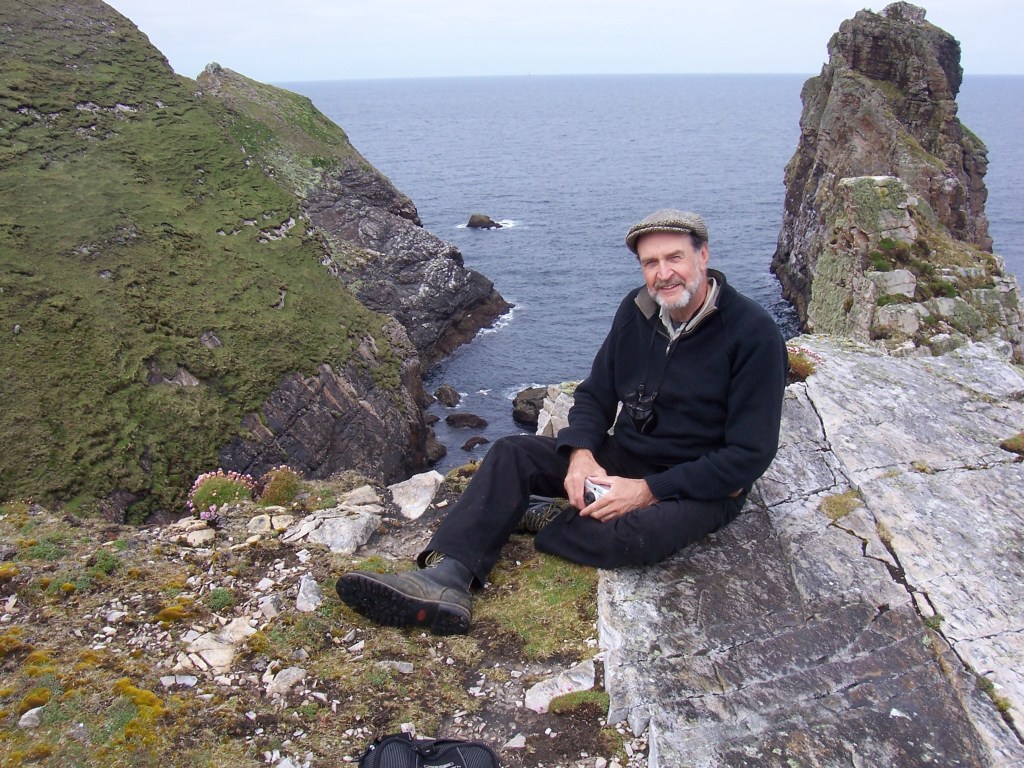
Many people who follow my blog will have met my partner – my beloved, my editor, my co-facilitator – Tom Sigafoos.
In the spirit of Charles Dickens, Margaret Atwood and Stephen King, Tom has serialized his novel “The Cursing Stone” and is making it available online for free – click here to subscribe. Here’s Tom’s message:
I’ve published The Cursing Stone, an Irish historical novel, and I’d like to invite you to read it at no cost.
County Donegal, Ireland, 1884. Your island home is threatened with evictions. How far would you go to stop them?
The fates of two men – Ruari Mullan of Tory Island, and Sub-Lieutenant William Gubby of HMS Wasp – intersect in the disastrous arc of the Irish Land Wars.
If you’ll sign up to my mailing list, I’ll send you The Cursing Stone in weekly instalments. I’ll also send Bonus Materials – photos, maps and unusual background information.
There is no cost to sign up or read the instalments. If you enjoy the novel, I’ll appreciate it if you’ll write a review. That’s the entire proposal – no strings attached.
To subscribe to The Cursing Stone, please follow this link and sign up at www.tomsigafoos.com. If you change your mind, you’ll always have the option to un-subscribe.*
Paperback and ebook versions of The Cursing Stone are also available from Lulu and Amazon.
If you know others who’d enjoy reading a lively historical novel, please forward this invitation to them as well. Questions? Please contact me at tomsigafoos@gmail.com.
Thanks and best wishes,
Tom Sigafoos
*You’ll receive an email in your primary inbox within an hour of your subscription. Others will follow every 3-4 days. If you don’t see them, please check your alternate email folders, like Social, Promotions and Spam. If you can’t find the emails, please let me know.”
Tune in to the Glens Centre YouTube channel https://bit.ly/3cdFExe at 7pm on Tues 23rd Feb 2021 to view eleven micro-films on the theme of “the border between us”.
These micro-films / visual-poems / digital-stories were created during a twelve week online programme facilitated by Rachel Webb and Monica Corish, supported by Across the Lines and the International Fund for Ireland.
On 25 August 2020, after four years without a single case, the African region was certified free of wild polio virus.
In 1994, a few days after I arrived in the border town of Nimule in South Sudan, I woke in the night to a bone-chilling cry. It reminded me of an Irish caoineadh, a keening for the dead. In the morning I heard that a baby had died of measles. I was stunned. I knew, from book-learning, that measles can damage the nerves, the eyes, the ears, the brain. I knew in my head that measles can be fatal, but in my heart I still thought of it as a benign childhood disease.
The epidemic raged through the small town, taking the children who were weak, malnourished, immuno-compromised. Night after night I heard the songs of grief – five children dead, still more facing lifelong disability – and then silence. The epidemic had burned itself out.
***
I was in Nimule to train community health workers, and to help with a programme of immunisation. With a team of South Sudanese and Kenyan health workers, I visited local villages and camps. Everywhere we went we offered immunisation against diphtheria, whooping cough, tetanus, measles, tuberculosis and polio.
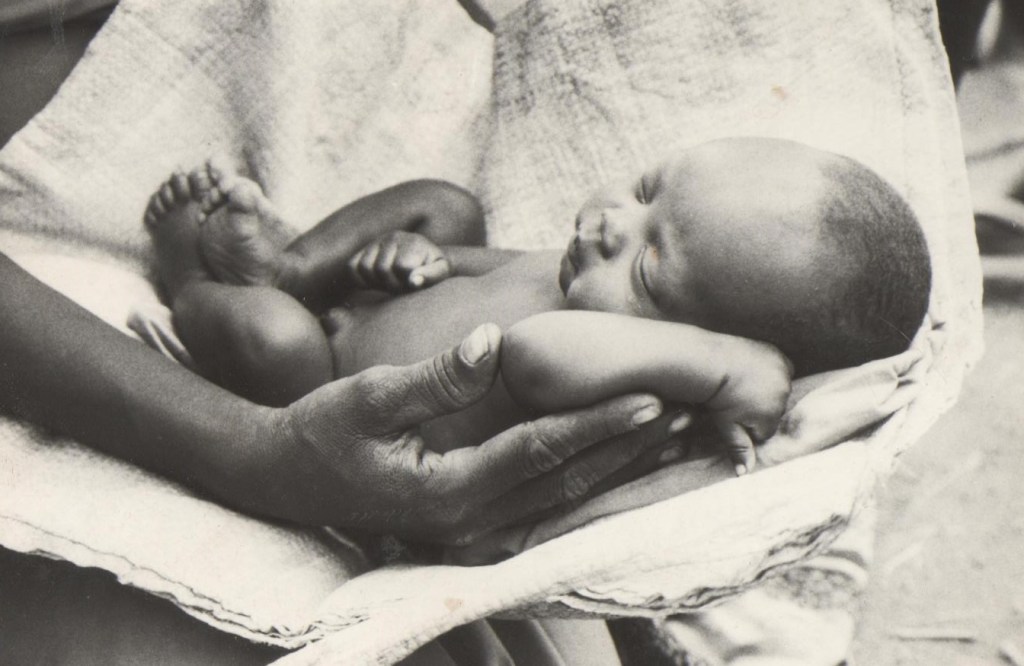
I met a young woman in one of the villages. She held her baby to her breast, in a wrap made out of a food sack. I asked how old her baby was. One week, she said. I asked if I could see. She unfolded the wrap and showed me her child. I can’t remember if it was a boy or a girl – I can’t remember the young woman’s name – I only remember her grace, her weathered hand holding her child, the newborn’s sleeping perfection. I asked the young woman if I could take a photograph of her baby. She said yes.
***
In 1994 an estimated 75,000 children across Africa were paralysed for life by the polio virus. Thousands of those children died when the virus paralysed their breathing muscles. Nelson Mandela, the recently elected president of South Africa, refused to accept this ongoing tragedy. “When people are determined,” he said, “they can overcome anything.” In 1996, in partnership with Rotary International, Mandela launched the “Kick Polio Out of Africa” campaign. Footballs with the slogan showed up everywhere – in stadiums, in school yards, on dusty soccer pitches. Communities, parents, health workers, volunteers, churches, mosques, governments, donors – they all came together, united by one aim – to immunise every child on the continent against this crippling disease.
***
On 25 August 2020, after four years without a single case, the 47 countries in the Africa region of the World Health Organisation were certified free of the wild polio virus. Today, because of the committed work of thousands of health workers and volunteers, more than 18 million people are able to walk, people who would otherwise have been paralysed by the virus.
But the fight against polio in Africa isn’t over yet. In Ireland, children are given an injectable vaccine that contains a dead form of the virus. This injectable form is expensive. Less well-off countries have to use an oral vaccine which contains an weakened form of the virus. In very rare circumstances this weakened virus can itself cause polio.
And so, although a huge milestone has been reached, immunisation and outbreak surveillance continue, and efforts are underway to make the injectable form of the virus available to everyone, everywhere. The journey continues, until the day when polio, like smallpox, is completely eradicated from the face of the earth.
***
That photo I took of the mother and her newborn has stayed with me over the years. I keep it close, on the door of my fridge, tucked into a diary, pinned to a corkboard.
I imagine this child grown to adulthood – I like that I don’t know whether it’s a girl or a boy – not knowing increases my sense of the possible lives this child may have led. I imagine that the infant in the photograph is a parent now, with children of their own. I imagine a baby, grandchild to the mother in the photograph, born into a world that is entirely free from the threat of polio.
A stunning art project, based in Carrick on Suir, described here by Margaret O’Brien, one of my Amherst Method writing colleagues. Heartbreaking and inspiring.
Artist Tony Oakey, right, holding the original legacy art piece, with the late Mary Wells’ daughter Geraldine and family, and niece Martina. Geraldine is holding a copy of the print.


 I sit here alone – up close against the day as it trickles into dusk, or drifting in a space that stretches from my seat to the moon – silent.




 Monica Corish