
Subscribe to continue reading
Subscribe to get access to the rest of this post and other subscriber-only content.
Subscribe to get access to the rest of this post and other subscriber-only content.
Midwife at the Birth
“She went into the stable and was in time to aid and minister to the Virgin Mother, and to receive the Child into her arms… ”
Genealogy of Brigid (451-525 AD), Carmina Gadelica
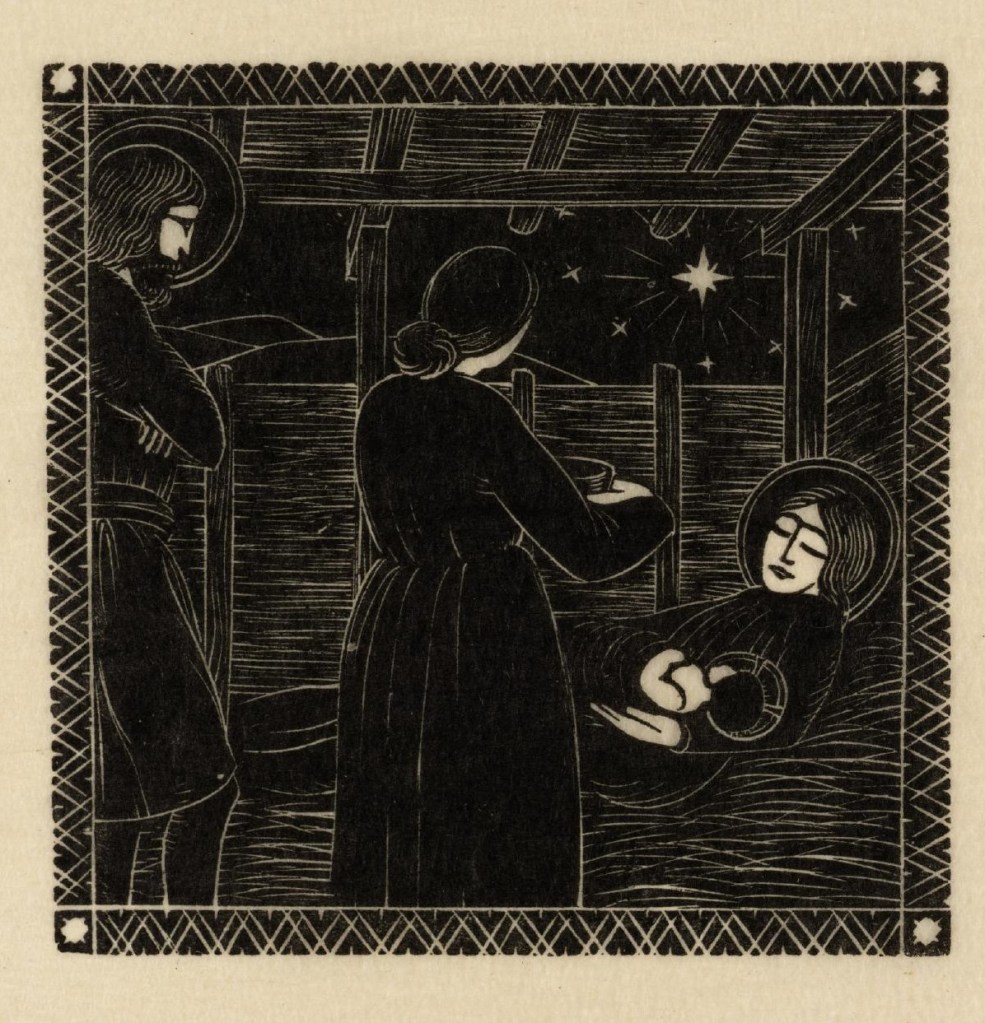
Brigid threw her eyes to heaven as the priest droned his way through the gospel. It’s as if he’s telling a dirge for a death, she thought, not an anthem for a birth and the best story of the year. But he’s a good man, gentle with the novices and their small sins, and not given to fawning over the pretty ones. Her mind drifted. Was it cold there, cold as this stone church on Christmas Eve? How did that poor frightened girl manage with only her old husband to help? The innkeeper’s wife would have been too busy – the shepherds knew how to deliver a lamb, they might have known been some help – but the angels waited until after the baby was born before they sang their Hosannas. Not a lick of sense between them. Why on earth didn’t Gabriel ask a midwife to be present for the birth?
The scraping of pews broke her reverie. She wrapped her green shawl close and took her place at the back, behind the line of monks and nuns. She noticed that Mother Muireann’s limp was getting worse, that Sister Imelda needed to mend her hem. She inched her way toward the altar, her breath fogging the chill air.
“Corpus Christi.”
The host dissolved on her tongue. She bowed her head and prayed, her body suffused with the light of God incarnate. Her slave-born mother’s words flashed through her mind. You have the spirit of a nun, Brigid, and the soul of a poet, and the hands of a skilful midwife. As the choir sang the recessional hymn, she fizzed with fear and excitement. Can it be done? Could I do it?
*
When the abbey was fast asleep, Brigid rose from her bed. The Chapel of the Flame reminded her, as it always did, of a small child nestled beneath the protection of the great winter oak. She laid one hand on fissured bark, one hand on lichened stone, breathing deep, asking for courage. Then she lifted the latch and opened the door. Áine was dozing on a bench at the far side of the fire.
“Sister Áine.”
The young nun snapped awake. “Mother Brigid!”
“I will tend the flame tonight. You may go to your bed.”
*
She gazed into the leaping flames, seeing again the old woman, the one who had tended the flame before the coming of the Christ-story. They shared the same name, Brigid, woman of valour. The old Brigid had been the last of her kind, the seer-women who communed with the goddesses and gods of old Ireland. She remembered her words: This flame sits over the eye of a holy well. It is a marriage of sacred water and sacred fire. It will not burn your flesh. This flame is a doorway into the time before, and a doorway into the time that is to come. If your intention is pure, this flame will take you where you need to go. She had never, in all her years as abbess, tested the truth of the old Brigid’s story. Because, she thought, I am still wary of the pagan mysteries, I worry that their power might seduce me away from the Christ-story. But now, tonight, my intention is pure – none purer – to serve the Mother of God. She thrust her hand in, whipped it out. The small hairs on the back of her fingers had not been singed. She reached in again, felt a liquid coolness. She stared at the drops of dew in her palm.
Do it now, she told herself, before your courage fails. She cleared a level space in the centre of the fire with the poker, then closed her eyes. With her inner eye she saw where she needed to go – the stable – the ox and the ass – the young woman, her belly huge with child – the old man Joseph – the guiding star.
She stepped in.
She was standing in the middle of a forked tree, three splayed trunks fanning out, one bent low to touch the ground. Between her feet, between the sister-trunks, she found the small un-burning flame, her pathway home. She sighed with relief. A drunk sang a tuneless song, someone shouted at him to shush. She became aware of the bustle of the inn – the star – the lamp-lit stable.
She stepped out from between the tree-trunks and walked across the sandy ground. Through the open doorway she saw Mary and Joseph, the young woman’s face knotted with pain, the old man’s face racked with fear. She knocked on the lintel.
“Greetings,” she said. “I am Brigid of Ireland. I have come to be midwife at the birth of your child.”

Fermanagh Writers are looking for short fiction (max 2000 words) and poetry (max 40 lines) to include in a new anthology, Loughshore Lines. Full details on their Facebook page. Submission date Sept 1 2021.

Wearing my Landscape and Myths Hat, here are a few links that might set the ink flowing: Boa Island Janus on Lower Lough Erne; Inis Saimer at the mouth of the river in Ballyshannon; and the many wonders of the Marble Arch Geopark. There’s lots more – about the name, the folklore and the legends of the river – on Wikipedia and in Ireland’s Own.


 Tune in to the Glens Centre YouTube channel on Friday, June 26 at 8 PM, to hear poems, stories and songs inspired by Lunasa. The cycle of the year that began with the dark of Samhain is crowned by the brightness of Lugh, and by the harvest festival held in his name. As part of our Lunasa workshop we visited the Shannon Pot and the Cavan Burren, an extraordinary landscape of weathered limestone and megalithic monuments crafted by Ireland’s first farmers.
This episode will feature writing from Tom Sigafoos, Paula Lahiff, Shane Leavy, Dermot Lahiff and Monica Corish; and singing from Tara Baoth Mooney and Maggie Kilcoyne. This event is a fundraiser for North West STOP Suicide Prevention, which provides counselling support for people at risk of suicide. Donations can be made through their website, or through Facebook.
Image credit: Lugh, Brian Froud
The endlessly inventive and productive people at Across the Lines (IFI) / Open Mic Manor / The Thing Itself are inviting video or audio contributions for their next Crossing Borders Open Mic Online (IFI). The theme for this event is “Way-points and Markers” – the places, journeys and signposts that have marked our individual and collective transitions over the last three months. They invited me to come up with a prompt to spark contributions. Here it is:
Hestia is the Greek goddess of interiors, of contemplative time and space. She is the hearth-fire that makes a house into a home.


Hermes is the trickster god of travel, trade, computers, protector of doorways and boundaries, the messenger and mover, the communicator.


In her books “Goddesses in Everywoman” and “Gods in Everyman”, Jean Shinoda Bolen tells how these two very different archetypes are related. In Greek households the “herm” – a pillar symbolizing Hermes – stood just outside the front door, in a distinct but intimate connection with Hestia’s hearth-fire at the centre .
I invite you to see in your mind’s eye a place that represents the containment of “lockdown”; and a place that represents the process of “unlocking”. These places may be in the geography of your home, your county, your country, the world; or virtual places; or the space inside the arms of someone you love – a hug you are grateful to have received during lockdown, or a hug you are still yearning towards.
Whatever spaces come to you, feel them through your senses, through smell, and sight and touch and sound. And then write about these two spaces, placing them in relationship each with the other.
Photo credits:
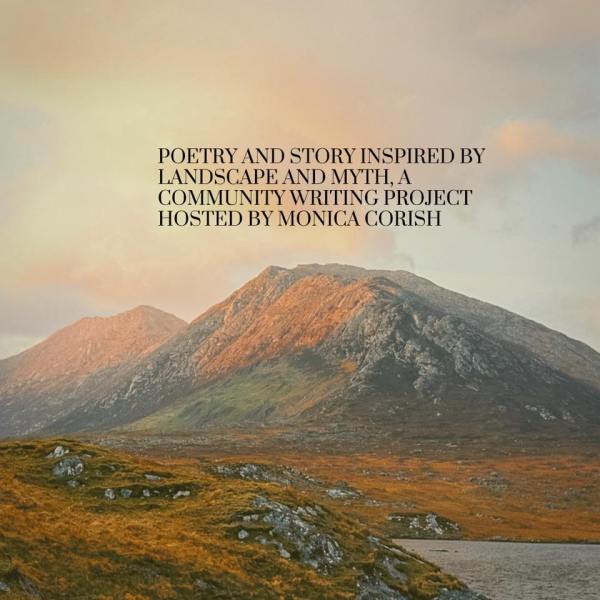 Tune in to the Glens Centre YouTube channel on Friday, June 5, 12, 19 and 26 at 8 PM, to hear poems, stories and songs inspired by the myths and legends, landscapes and festivals of the North West. Featuring work from:
You can hear more about these broadcasts in Brendan Murray’s interview with Monica Corish on Ocean FM’s Arts North West, on Thursday, June 4 at 9:30 PM (repeat Sunday, June 7 at 8 PM).
This event is a fundraiser for North West STOP Suicide Prevention, which provides counselling support for people at risk of suicide. Donations can be made through their website, or through Facebook.

At this workshop, based on the Amherst Method, we will write in response to prompts inspired by Imbolc / Lá Fhéile Bríde.
Imbolc is associated with the birth of lambs, the spring sowing, the return of the long days and the fire of the sun. It is a time of new beginnings, green shoots, the unploughed field, the blank page. Imbolc is also known as Brigid’s Day – Lá Fhéile Bríde. Brigid, honoured both as a pre-Christian goddess and as a Christian saint, is linked with blessing and fertility, inspiration, midwifery and birth.
No previous knowledge of myth or experience of writing is necessary to participate in this writing workshop – all you need bring with you is a notebook, a pen, and a willingness to be surprised by your own unique voice.
“What brings me back time and again is the surprise of not knowing what will emerge…”
The Glens Centre, Manorhamilton, Sunday, November 3, 10:30 – 16:30. €30, booking through https://glenscentre.ticketsolve.com/shows/873607199 or phone the Glens: (071) 9855833. Led by Monica Corish, award-winning writer and AWA certified writing workshop leader.
 At this workshop we will write in response to prompts inspired by Samhain.
The festival of Samhain is associated with borders, boundaries and liminal spaces – between life and death, sleep and waking, the world of the everyday and the world of the sídhe. It is the time of summer’s end and the beginning of winter and the Celtic year, a time when the veil between worlds is thinned. Our writing may be inspired by any realm – by mythical borders or by political limits and lines on the map. No previous experience of writing is necessary – all you need bring with you is a notebook, a pen, and a willingness to be surprised by your own words.
The Field Trip
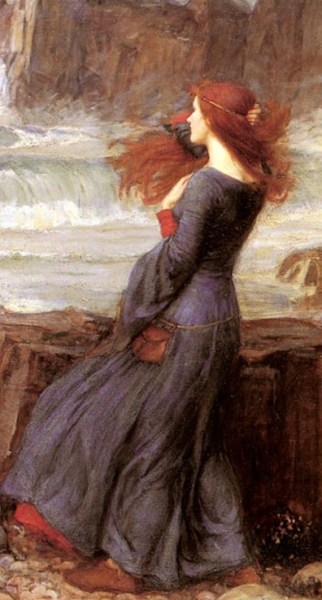 The day will begin with a meet-up and writing exercise in the Glens Centre. Weather permitting we will then go on a car-pooling, wheelchair-accessible field trip to the Shannon Pot, followed by an alfresco lunch and writing session at the Cavan Burren.
There is a catering van at the Cavan Burren, run by Cuilcagh Catering. They offer soup, sandwiches, chips, breakfast baps, scones, tea, coffee etc – alternatively, you can bring your own lunch. We will return to the Glens Centre for the afternoon writing session.
Weather
The Met Eireann forecast offers the probability of 13°C, some light drizzle and a gentle breeze. So dress warm, wear rain gear, walking shoes or sandals – no need for boots – and, in case the forecast is entirely wrong, a sun hat. And if it looks like there will be more than occasional drizzle, we will follow an indoor-based mystery Plan B…
Feedback from the Bealtaine workshop
You brought the myths alive again for me… Very good workshop, well researched and well planned… I could not believe how much gold I unearthed… Very interesting triggers… An incredibly encouraging and talent-nurturing workshop….
 Monica Corish